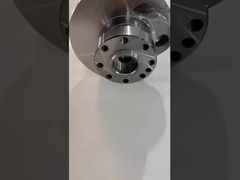
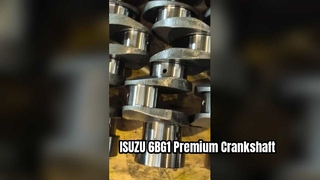
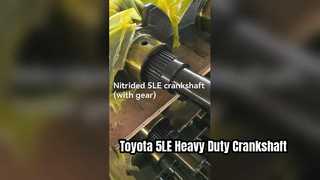
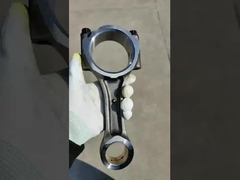
Brief: In this video, we provide a detailed walkthrough of the OM651 Casting Iron Auto Engine Crankshaft for Mercedes-Benz 651 engines. You'll see a close-up demonstration of its construction, including the key differences between the 4-counterweight and 8-counterweight versions. We explain how this critical component ensures smooth operation and durability in the 2.2L diesel engine, helping you understand its role in engine performance and reliability.
Related Product Features:
Designed specifically for Mercedes-Benz 651 series 2.2L diesel engines.
Manufactured from high-quality casting iron for superior strength and durability.
Available in both 4-counterweight and 8-counterweight configurations.
Compatible with part numbers A6510301201 and A6510302501.
Ensures smooth engine operation by converting piston motion into rotational force.
Precision-engineered to meet OEM specifications for reliable performance.
Robust construction minimizes vibration and extends engine lifespan.
Critical component for maintaining optimal power output in diesel engines.
Ερωτήσεις:
Which Mercedes-Benz engines is this OM651 crankshaft compatible with?
This crankshaft is specifically designed for the Mercedes-Benz 651 series 2.2L diesel engines and is compatible with part numbers A6510301201 and A6510302501.
What are the differences between the 4-counterweight and 8-counterweight versions?
The 4-counterweight and 8-counterweight versions offer different balancing characteristics, with the 8-counterweight design typically providing better vibration reduction and smoother operation at higher RPMs, while the 4-counterweight version may be optimized for specific performance requirements.
What material is used in the construction of this crankshaft?
This OM651 crankshaft is manufactured from high-quality casting iron, providing excellent strength, durability, and wear resistance necessary for demanding diesel engine applications.
How does this crankshaft contribute to engine performance?
The crankshaft converts the linear motion of pistons into rotational force that drives the vehicle. Its precision engineering ensures smooth power delivery, reduces vibration, and maintains optimal engine efficiency and longevity.